Northern Re-supply
Remote communities in Canada depend on annual sealift, winter roads and small airplanes for
transportation services. These annual services are least expensive and necessary to transport
heavy, indivisible, or bulky goods. These services are inconvenient however, even for storable
cargo, because annual re-supply imposes significant inventory financing costs on buyers.
Goods have to purchased and assembled in advance of transport, then inventoried for the
balance of the year. Airplanes provide year round service for perishable and higher value goods
that they can accommodate (typically less than 7 tons payload), but they are expensive.
Perishable food product prices can be easily double the cost of the same goods in the south.
Construction of airstrips during the early 1970s improved the communications and services
available to the remote communities in Manitoba. While some airports need upgrading, and
few more need to be constructed, the long-term problem for aviation is the absence of
replacement aircraft. Air service to the remote communities depends on aircraft that are
reaching the end of their practical operating lives. Some airplanes have been identified that
could be used, but they require longer runways and significantly higher freight rates to be
economically viable in the North.
Significant distances are travelled to reach these broadly dispersed small population centres.
Approximately 33,800 people live in 39 remote communities in Manitoba.
The Manitoba government spends about $5.5 million annually to build, maintain and operate
over 2,000 kilometres of winter roads. The cost to build a winter road ranges from $2,000 to
$3,000 per kilometre. Winter roads open in January and close during March each year. Most
winter roads are a combination of ice roads built over frozen lakes with based portions built
over muskeg or solid ground. The cost of converting a winter road in to all-weather gravel roads
is about $ 0.5 million per kilometre. For Manitoba, the cost of converting the winter road
network would be about $1 billion in total.
Few kilometres of all-weather roads are likely to be built in the North because the burden of
sustaining the existing road infrastructure exceeds the financial ability of the Province of
Manitoba. The Manitoba Government's 2020 Transportation Vision consultation process
identified the following significant issues facing the existing road network:
Rapidly deteriorating aging highways
Over 1/3 of the paved surfaces are rated poor
Almost 1/4 of the bridges are at or beyond their normal service life of 50 years and need
immediate repair
Over 2/3 of the gravel surfaces are below standard
Increased highway traffic and higher truck weighs are impacting the road surfaces
There are increasing restrictions on year-round RTAC/A1 routes
The 2020 Vision report estimates that 30 percent of the existing roads (4,600 km) need
pavement rehabilitation, or reconstruction, at an estimated cost of $1.2 billion. A further 40
percent (5,100 km) need to improvements within the next 10 years at a cost of $1.1 billion.
Given the backlog of deferred maintenance and reconstruction facing the existing highway
network in Manitoba, residents in the North can expect only marginal improvements in the all-
weather roads to their communities.
One of the most basic commodities required to support life in remote communities is fuel.
Diesel fuel for power generation is loaded at fuel depots located in Winnipeg. An entire years
supply is shipped in bulk tanker trucks during the short winter road season. If a community
runs out, emergency supplies are airlifted in at great expense. Lack of fuel for heating is not an
option for life in the harsh climates of the north. Bulk tanker trucks also transport Jet A fuel for
aircraft and gasoline to supply cars, trucks and snowmobiles. All fuels are stored in tank farms
located in the communities. For the most part, northern stores or independent fuel dealers
operate the bulk storage sites.
Onsite inventories impose significant inventory carrying costs. For example, the Northwest
Company delivers approximately 3.5 million litres of diesel to the 11 communities where it
supplies fuel and maintains storage. If the inventory levels were reduced to a months supply,
the maximum amount of fuel that would have to be stored would be approximately 300,000
litres. The resulting reduction in carrying costs, assuming a fuel cost of $0.70/litre and an
interest rate of 3.5 percent would be $80,000 annually. Another benefit of year round supply is
the opportunity to manage fuel prices better by being able to purchase throughout the year
rather than during a short window. Finally, the risks of environmental damage due to a major
tank leak would be lessened.
Winter roads are the lifelines for these isolated settlements providing them with access to
storable goods, such as fuel, canned foods and durables. Winter roads also create employment
for road construction and maintenance, and facilitate intercommunity travel. Transportation
over winter roads is costly on a ton-kilometre basis because of the low vehicle utilization and
limited two-way hauling. Additionally, severe weather affects reliability and adds an element of
risk in terms of both safety and operational efficiency. In many years, some trucks layover until
its safe to go back out on the road the following winter.
Climate Change
The supply of transportation services to the north has not changed greatly in the past three
decades. Some refinements in the winter roads have occurred where sections have been re-
routed to land and away from lake crossings. In addition, pre-fabricated wooden bridges have
been installed over river crossings to cut the distances and improve the reliability of some
winter road routes. On the other hand, the evidence of climate change is creating new
concerns about the sustainability of existing transportation means.
The milder winters experienced in Manitoba are cutting the number of days that winter roads
can operate in the province. Whereas 50 to 60 days of operation was the norm east of Lake
Winnipeg prior to the mid-1990s, less than 30 days utilization is observed in half the years
since 1997. Thus far, the problem is less pronounced further north, but the impact of climate
change is expected to be greater there because the magnitude of global warming is
accentuated in the higher latitudes. Warmer temperatures could make the sealift operations
safer and extend their season, but this is of limited value in Manitoba that depends mainly on
winter roads.
The impact a warming trend in temperatures is estimated to have very deleterious effects on
the operating season of winter roads. Detailed statistical studies of climate change in the
Berrens River region have projected that warmer temperatures will reduce the winter road
season by 5 to 14 days over the next 75 years.
Estimates of Winter Road Operations, 2020- 2080

The
warming
climate
trend
has
caused
government
planners
to
reconsider
the
viability
of
winter
roads.
Their
response
is
to
begin
realigning
winter
roads
over
land
to
reduce
their
dependence
on
ice
crossing
that
are
no
longer
reliable
or
safe.
The
costs
per
capita
of
upgrading
and
maintaining
these
road
systems
is
high
because
of
the
difficult
terrain,
including
muskeg
and
multiple
stream
and
river
crossings,
and
the
length
of
road
that
must
be
built
to
service
a
community of only a few thousand people.
Quality of Life
Like
all
technological
and
economic
changes,
better
transportation
has
mixed
social
effects.
The
loss
of
wilderness
setting
and
traditional
lifestyles
could
be
the
outcome
of
constructing
all
weather
roads.
Some
First
Nations
worry
that
opening
access
to
hunters
from
the
south
and
cottage
developments
could
affect
negatively
on
traditional
trapping
areas.
At
the
same
time,
all-weather
roads
would
reduce
the
social
isolation.
Inter-community
travel
is
expensive
by
air
charter,
or
limited
to
the
period
of
winter
roads.
The
cost
of
air
travel
limits
inter-community
contact and visiting children who are away at school in the south.
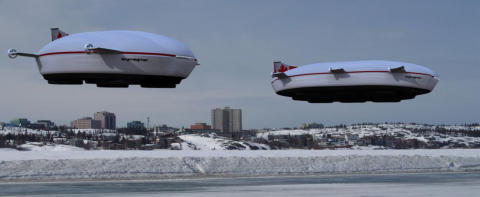
Hybrid
air
vehicles
could
have
less
detrimental
impacts
than
all
weather
roads.
The
communities
could
continue
to
enjoy
a
geographical
buffer
from
the
outside,
and
preserve
the
virgin
forest
intact.
At
the
same
time,
hybrid
air
vehicle
will
be
combination
vehicles
that
carry
passengers
as
well
as
cargo.
It
seems
likely
that
hybrid
air
vehicle
would
follow
routes
that
connect
communities
rather
than
doing
point-to-point
deliveries
from
some
larger
base
to
individual locations .
Patients
requiring
complex
medical
services
in
Manitoba
are
transported
to
hospitals
in
Winnipeg
or
Thompson.
The
availability
and
comfort
of
this
transport
depends
on
the
severity
of
the
problem,
but
air
ambulances
are
too
expensive
for
more
than
emergency
cases.
Hybrid
air
vehicle
could
provide
a
much
better
system
of
transport
for
medical
treatment.
The
space
available
in
a
hybrid
air
vehicle
could
accommodate
cots,
and
it
is
conceivable
that
a
hybrid
air
vehicle could be outfitted with a dental unit that could provide care during each circuit.
Copyright © 2023
Millennium Airship Inc/SkyFreighter Canada Ltd













Northern Re-supply
Remote communities in Canada depend on annual sealift,
winter roads and small airplanes for transportation services.
These annual services are least expensive and necessary to
transport heavy, indivisible, or bulky goods. These services are
inconvenient however, even for storable cargo, because annual
re-supply imposes significant inventory financing costs on
buyers. Goods have to purchased and assembled in advance of
transport, then inventoried for the balance of the year. Airplanes
provide year round service for perishable and higher value
goods that they can accommodate (typically less than 7 tons
payload), but they are expensive. Perishable food product prices
can be easily double the cost of the same goods in the south.
Construction of airstrips during the early 1970s improved the
communications and services available to the remote
communities in Manitoba. While some airports need upgrading,
and few more need to be constructed, the long-term problem
for aviation is the absence of replacement aircraft. Air service
to the remote communities depends on aircraft that are
reaching the end of their practical operating lives. Some
airplanes have been identified that could be used, but they
require longer runways and significantly higher freight rates to
be economically viable in the North.
Significant distances are travelled to reach these broadly
dispersed small population centres. Approximately 33,800
people live in 39 remote communities in Manitoba.
The Manitoba government spends about $5.5 million annually
to build, maintain and operate over 2,000 kilometres of winter
roads. The cost to build a winter road ranges from $2,000 to
$3,000 per kilometre. Winter roads open in January and close
during March each year. Most winter roads are a combination of
ice roads built over frozen lakes with based portions built over
muskeg or solid ground. The cost of converting a winter road in
to all-weather gravel roads is about $ 0.5 million per kilometre.
For Manitoba, the cost of converting the winter road network
would be about $1 billion in total.
Few kilometres of all-weather roads are likely to be built in the
North because the burden of sustaining the existing road
infrastructure exceeds the financial ability of the Province of
Manitoba. The Manitoba Government's 2020 Transportation
Vision consultation process identified the following significant
issues facing the existing road network:
Rapidly deteriorating aging
highways
Over 1/3 of the paved surfaces
are rated poor
Almost 1/4 of the bridges are at or beyond their normal
service life of 50 years and need immediate repair
Over 2/3 of the gravel surfaces are
below standard
Increased highway traffic and higher truck weighs are
impacting the road surfaces
There are increasing restrictions on year-
round RTAC/A1 routes
The 2020 Vision report estimates that 30 percent of the
existing roads (4,600 km) need pavement rehabilitation, or
reconstruction, at an estimated cost of $1.2 billion. A further 40
percent (5,100 km) need to improvements within the next 10
years at a cost of $1.1 billion. Given the backlog of deferred
maintenance and reconstruction facing the existing highway
network in Manitoba, residents in the North can expect only
marginal improvements in the all-weather roads to their
communities.
One of the most basic commodities required to support life in
remote communities is fuel. Diesel fuel for power generation is
loaded at fuel depots located in Winnipeg. An entire years supply
is shipped in bulk tanker trucks during the short winter road
season. If a community runs out, emergency supplies are
airlifted in at great expense. Lack of fuel for heating is not an
option for life in the harsh climates of the north. Bulk tanker
trucks also transport Jet A fuel for aircraft and gasoline to supply
cars, trucks and snowmobiles. All fuels are stored in tank farms
located in the communities. For the most part, northern stores
or independent fuel dealers operate the bulk storage sites.
Onsite inventories impose significant inventory carrying costs.
For example, the Northwest Company delivers approximately
3.5 million litres of diesel to the 11 communities where it
supplies fuel and maintains storage. If the inventory levels were
reduced to a months supply, the maximum amount of fuel that
would have to be stored would be approximately 300,000 litres.
The resulting reduction in carrying costs, assuming a fuel cost of
$0.70/litre and an interest rate of 3.5 percent would be $80,000
annually. Another benefit of year round supply is the
opportunity to manage fuel prices better by being able to
purchase throughout the year rather than during a short
window. Finally, the risks of environmental damage due to a
major tank leak would be lessened.
Winter roads are the lifelines for these isolated settlements
providing them with access to storable goods, such as fuel,
canned foods and durables. Winter roads also create
employment for road construction and maintenance, and
facilitate intercommunity travel. Transportation over winter roads
is costly on a ton-kilometre basis because of the low vehicle
utilization and limited two-way hauling. Additionally, severe
weather affects reliability and adds an element of risk in terms of
both safety and operational efficiency. In many years, some
trucks layover until its safe to go back out on the road the
following winter.
Climate Change
The supply of transportation services to the north has not
changed greatly in the past three decades. Some refinements in
the winter roads have occurred where sections have been re-
routed to land and away from lake crossings. In addition, pre-
fabricated wooden bridges have been installed over river crossings
to cut the distances and improve the reliability of some winter road
routes. On the other hand, the evidence of climate change is
creating new concerns about the sustainability of existing
transportation means.
The milder winters experienced in Manitoba are cutting the
number of days that winter roads can operate in the province.
Whereas 50 to 60 days of operation was the norm east of Lake
Winnipeg prior to the mid-1990s, less than 30 days utilization is
observed in half the years since 1997. Thus far, the problem is less
pronounced further north, but the impact of climate change is
expected to be greater there because the magnitude of global
warming is accentuated in the higher latitudes. Warmer
temperatures could make the sealift operations safer and extend
their season, but this is of limited value in Manitoba that depends
mainly on winter roads.
The impact a warming trend in temperatures is estimated to
have very deleterious effects on the operating season of winter
roads. Detailed statistical studies of climate change in the Berrens
River region have projected that warmer temperatures will reduce
the winter road season by 5 to 14 days over the next 75 years.
Estimates of Winter Road Operations, 2020- 2080

The
warming
climate
trend
has
caused
government
planners
to
reconsider
the
viability
of
winter
roads.
Their
response
is
to
begin
realigning
winter
roads
over
land
to
reduce
their
dependence
on
ice
crossing
that
are
no
longer
reliable
or
safe.
The
costs
per
capita
of
upgrading
and
maintaining
these
road
systems
is
high
because
of
the
difficult
terrain,
including
muskeg
and
multiple
stream
and
river
crossings,
and
the
length
of
road
that
must
be
built
to
service
a
community
of
only
a
few
thousand people.
Quality of Life
Like
all
technological
and
economic
changes,
better
transportation
has
mixed
social
effects.
The
loss
of
wilderness
setting
and
traditional
lifestyles
could
be
the
outcome
of
constructing
all
weather
roads.
Some
First
Nations
worry
that
opening
access
to
hunters
from
the
south
and
cottage
developments
could
affect
negatively
on
traditional
trapping
areas.
At
the
same
time,
all-weather
roads
would
reduce
the
social
isolation.
Inter-community
travel
is
expensive
by
air
charter,
or
limited
to
the
period
of
winter
roads.
The
cost
of
air
travel
limits
inter-community
contact
and
visiting
children
who
are away at school in the south.
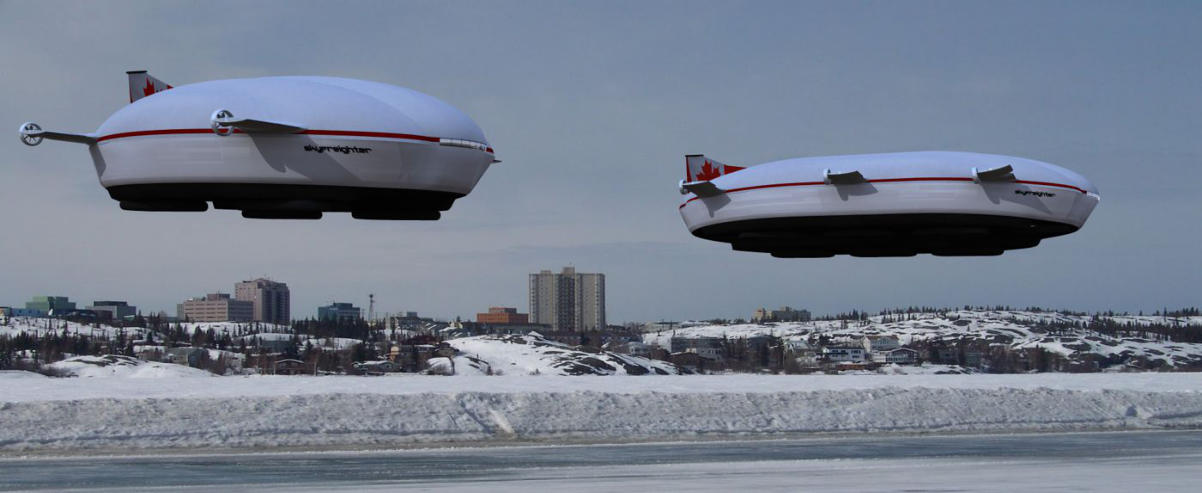
Hybrid
air
vehicles
could
have
less
detrimental
impacts
than
all
weather
roads.
The
communities
could
continue
to
enjoy
a
geographical
buffer
from
the
outside,
and
preserve
the
virgin
forest
intact.
At
the
same
time,
hybrid
air
vehicle
will
be
combination
vehicles
that
carry
passengers
as
well
as
cargo.
It
seems
likely
that
hybrid
air
vehicle
would
follow
routes
that
connect
communities
rather
than
doing
point-to-point
deliveries
from some larger base to individual locations .
Patients
requiring
complex
medical
services
in
Manitoba
are
transported
to
hospitals
in
Winnipeg
or
Thompson.
The
availability
and
comfort
of
this
transport
depends
on
the
severity
of
the
problem,
but
air
ambulances
are
too
expensive
for
more
than
emergency
cases.
Hybrid
air
vehicle
could
provide
a
much
better
system
of
transport
for
medical
treatment.
The
space
available
in
a
hybrid
air
vehicle
could
accommodate
cots,
and
it
is
conceivable
that
a
hybrid
air
vehicle
could
be
outfitted
with
a
dental
unit
that
could
provide
care during each circuit.
Copyright © 2023
Millennium Airship Inc/SkyFreighter Canada Ltd